The numbers tell a strange story
In 2024, Americans gave $592.5 billion to charity - a new record. By every reasonable headline measure, generosity is alive and well.
Except when you look at who's actually giving.
Just 3 percent of donors now account for 78 percent of all charitable dollars, according to the Fundraising Effectiveness Project. Meanwhile, two-thirds of American households donated to charity in 2000. Today, that number is roughly half - a loss of approximately 20 million giving households. Micro donors, people giving under $100, fell nearly 14 percent in 2023 and another 9 percent in 2024. Overall donor retention dropped to 31.9 percent by 2025. Which means that seven out of ten first-time donors never give again.
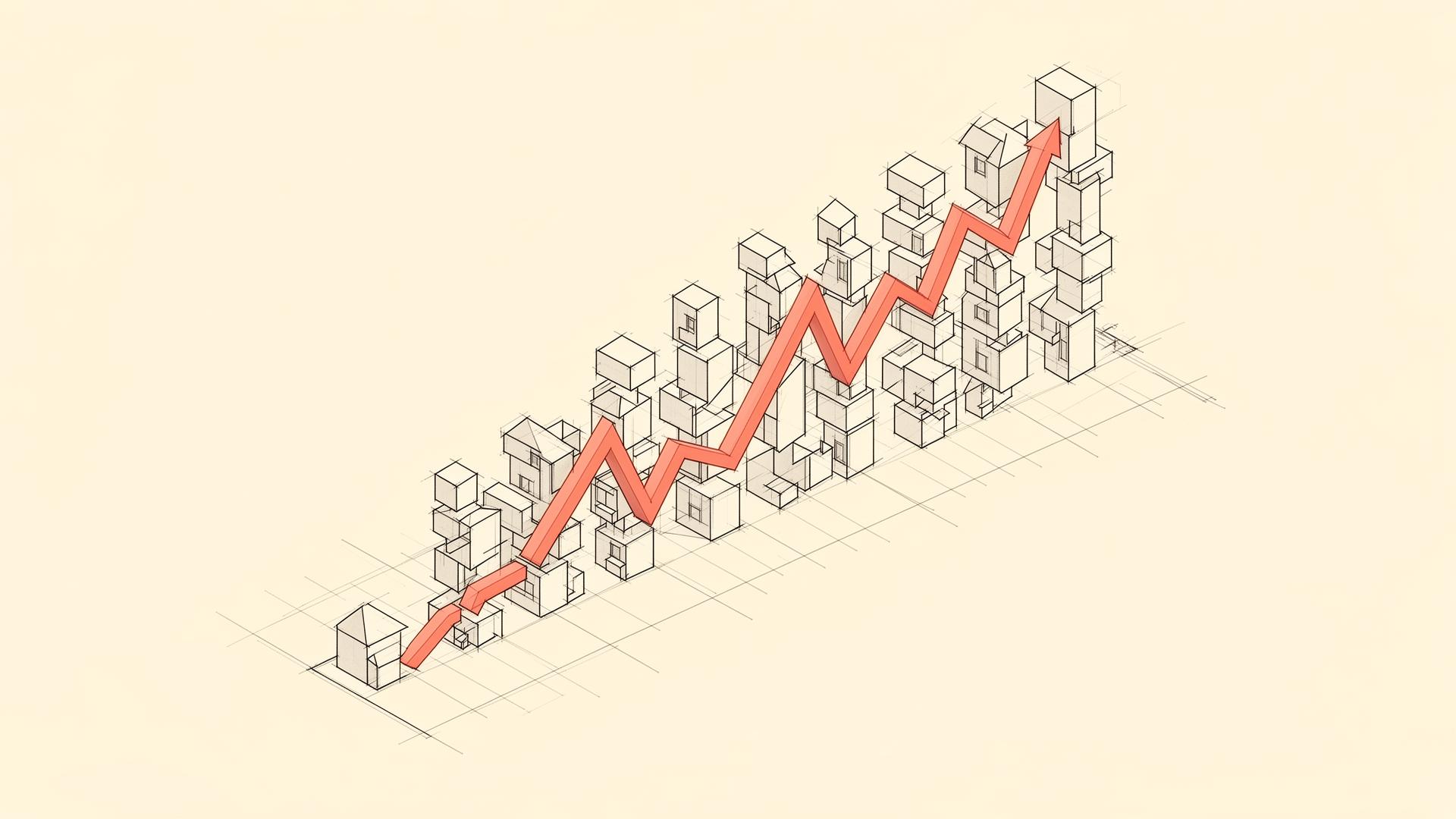
The headline looks fine. What's hollowing out is everything underneath it - total dollars climbing while the number of people giving keeps falling, the grassroots base quietly eroding quarter by quarter. This isn't a generosity problem. It's a concentration problem, and what's being lost is more than revenue.

The friction tax
Six ways giving fails you vs. one tap.
The old way
Six dead ends- 1
The disaster scroll
You see something terrible in the news, feel the urge to help, Google it, find too many options, tell yourself you'll come back to it. You don't.
- 2
The social pressure give
A friend shares a GoFundMe. You give because you care about them, not the cause. It feels good for a moment. It never becomes a second time.
- 3
The end-of-year scramble
December hits, you realize you haven't donated all year, you pick something quickly for the tax receipt. Reactive, not intentional. Resets January 1.
- 4
The checkout prompt
“Round up for X?” You tap yes at the register. You don't know where it went. You don't feel anything.
- 5
The subscription you forgot
You signed up for a monthly donation two years ago. You're not sure it's still active. You've never checked what it funded.
- 6
The “I keep meaning to.”
You genuinely want to give more. You've thought about it. But picking the org, the amount, the cadence - it never quite happens.
…six different ways to mean well and still not give.
 10 sec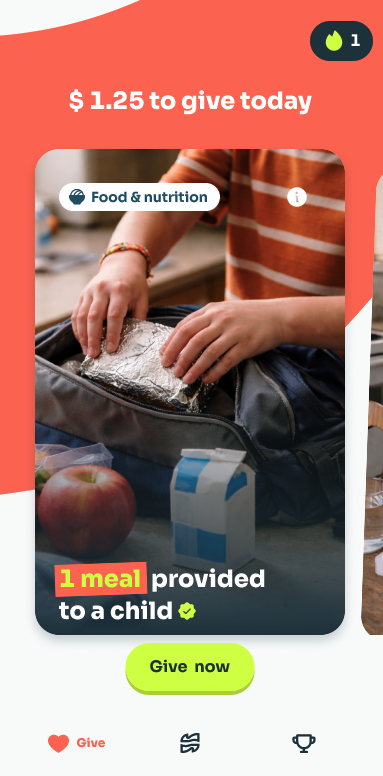
One cause. One tap. Done.
Matched to what you care about. Receipt in your wallet.
Why grassroots giving decline threatens more than money
Community-based organizations don't just depend on small donors for cash. They depend on them for legitimacy, for local accountability, for the kind of distributed social trust that no foundation grant can replicate or buy. When 20 million giving households stop participating, nonprofits become progressively more reliant on major donors, foundation grants, and government contracts. Each of those sources comes with conditions - reporting requirements that consume staff time, restrictions that limit flexibility, timelines that reward quick wins over slow, systemic change.
The organizations doing the most innovative, highest-risk work are precisely the ones that can't survive on concentrated, elite funding. Sustained social change requires patient capital and distributed experimentation. The kind of work that actually transforms communities over decades - a model like the Harlem Children's Zone, which took years of development before it could demonstrate the outcomes that attract large philanthropic investment - doesn't fit anyone's three-year grant cycle. It only works when there's a stable, renewable base underneath it.
As Stanford Social Innovation Review noted in their Spring 2026 issue: when funding concentrates, innovation narrows to whatever wealthy donors are willing to fund this year. The organizations testing community-led solutions, addressing root causes instead of symptoms, experimenting with prevention over remediation - those are the ones most vulnerable when the grassroots base erodes. The money doesn't disappear. It just stops flowing where the most important work is happening.
People didn't stop caring. The system stopped working.
In 2017, the Tax Cuts and Jobs Act nearly doubled the standard deduction, removing itemization benefits for nine in ten taxpayers. Economists predicted giving would fall. It did. Research from the National Bureau of Economic Research estimates the change reduced charitable giving by nearly $20 billion in 2018 alone. The Urban-Brookings Tax Policy Center tracked a corresponding collapse in households claiming charitable deductions - from 37 million down to 16 million in a single year.
Simultaneously, trust in institutions, including nonprofits, fell to historic lows. For a potential donor already uncertain about where their money goes and whether it actually does anything, harder questions became easier reasons not to engage at all.
Then there's the economic picture that aggregate statistics consistently flatter. Stock markets looked healthy and GDP grew, but housing costs have exploded in most regions, healthcare expenses keep climbing, and real wages for middle-class households have stagnated for decades. When a family with a tight budget has to choose between retirement savings and a donation, retirement wins. That's not a values failure. That's arithmetic. We dug into the math on what a single dollar can actually do.
And on top of all that, something subtler eroded: the communities that historically cultivated a culture of giving. Faith communities, which accounted for 56 percent of charitable dollars in the mid-1980s, now account for about 25 percent. Workplace giving programs, civic organizations, neighborhood associations - the social infrastructure that made asking for and giving money feel normal rather than transactional is shrinking. When fewer people belong to communities where generosity is a shared practice, fewer people give - not because they stopped caring, but because the social context that made giving feel natural is no longer there.
None of this is a story about selfishness. None of it means people stopped caring about climate, hunger, mental health, or local communities. It means the conditions that made consistent, casual participation possible got systematically worse - and the system had no mechanism to help people stay connected at lower cost.

The real architecture failure
Here's the part that doesn't get talked about enough: even when people want to give, the system makes every act of giving harder than it needs to be.
Every campaign is a crisis. Every appeal is an emotional demand. Year-end emails imply that if you don't act immediately, something terrible will happen. This is how the giving architecture was designed - around urgency, scarcity, and peak moments. It extracts maximum donations per interaction by maximizing emotional weight per ask.
For a while, that works. Then it produces compassion fatigue - the exhausted sense that no matter what you do, the problems never shrink and the asks never stop. It's not a character flaw. It's what happens when the system forces you to re-justify your generosity from scratch every single time, with no way to participate quietly, consistently, and without a full emotional re-commitment each time. More on why compassion fatigue is a design problem, not a moral one.
The result is predictable: giving becomes irregular, high-effort, and draining. People who genuinely care pull back - not because they stopped caring, but because the architecture demands more energy per engagement than most people have to spare. It was designed for heroes. Most people aren't heroes. They're busy, well-meaning, and looking for a way to act on what they care about without it becoming another source of stress.
The fix isn't to make people care more. It's to stop treating each act of giving as if it requires a grand, isolated decision.
What consistent giving actually does for nonprofits
Monthly donors retain at over 80 percent year-over-year, while one-time donors retain at roughly 43 percent - and for first-year donors specifically, that number drops to around 19 percent. The difference isn't who cares more. It's who has to think less.
Donor retention rate
Subscription giving works. The data is not subtle.
Overall donor retention
0.0%
Monthly subscription donor retention
0%+
Nearly double. The gap isn't about who cares more - it's about who has to think less.
When someone commits to a small, recurring amount, the decision is made once. The giving becomes part of how they move through the world rather than an interruption of it. And what that consistency does on the receiving end compounds quickly. Organizations that convert even 20 percent of their donors to recurring giving see dramatic improvements in revenue predictability - and over five years, that compounding effect can double sustainable revenue without acquiring a single new donor.
Predictable revenue changes what's possible. A program that requires 12 months of continuous funding to show results - the kind that actually addresses root causes rather than symptoms - becomes viable when you know the money will still be there in month eight. It lets organizations hire, plan, take risks, and learn rather than scrambling to make payroll between crises. The math on what small, consistent giving adds up to is worth understanding in concrete terms: $1 a day from 1,000 people is $365,000 a year. The exact same 1,000 people making a $30 one-time donation in December is $30,000. Same generosity, wildly different operational impact. Consistency is the variable that changes everything - for the nonprofit and for the person giving.
Small amounts, given consistently, are the holy grail of nonprofit funding. Not because any single dollar is large, but because the stream of them is reliable enough to build lasting programs on.
A thousand people. A dollar a day. One year.
The same 1,000 people giving $30 once in December is $30,000. Same generosity, wildly different operational impact for the nonprofit.
Why donate? Because showing up is enough.
The real answer to "why donate to charity" isn't a moral argument about obligation. It's a practical argument about how change actually happens.
Change doesn't come only from headline-grabbing campaigns or transformative single donations. It comes from people showing up again, and again, and again - not dramatically, just regularly. The aggregate effect of thousands of people maintaining a small, sustained commitment is exactly what creates the conditions for organizations to do their best work: to experiment, to fail safely, to iterate toward something that actually sticks.
We don't have a generosity problem. We have a consistency problem. The generosity is there - research consistently shows that most Americans want to give and believe that giving matters. What's missing is an architecture that makes consistent participation easy enough to actually sustain. One that doesn't require a crisis to act on, doesn't ask you to re-decide every time, and doesn't treat emotional energy as the price of entry.
That's the design problem worth solving. Not "how do we make people care more?" - but "how do we build something that makes showing up so easy that caring translates into action, over and over, without burning anyone out?"
The problem is infrastructure. The solution is infrastructure too.
Run the numbers yourself
What does consistent giving actually look like?
Drag the sliders. Watch what a small habit, multiplied, can do.
People giving
1,000
Per day
$1
For
12 mo
Total raised
$360,000
That's enough to fund any of these:
720,000
meals through a food bank
At ~$0.50 per meal sourced
30,000
crisis hotline calls answered
At ~$12 per supported call
72,000
trees planted and maintained
At ~$5 per tree
Estimates based on commonly cited per-outcome costs. Real impact varies by organization.
Ritmo is a daily giving app built for people who already care. One tap, one choice, less than a minute. Download the app.
Sources
- Mark Dobosz, "Beyond the Mega-Gift: Collapse of Grassroots Giving Threatens Social Innovation", Stanford Social Innovation Review, Spring 2026.
- Association of Fundraising Professionals, FEP Q4 2024 Report.
- Xiao Han, Daniel M. Hungerman, and Mark Ottoni-Wilhelm, "Tax Incentives for Charitable Giving: New Findings from the TCJA", NBER.